

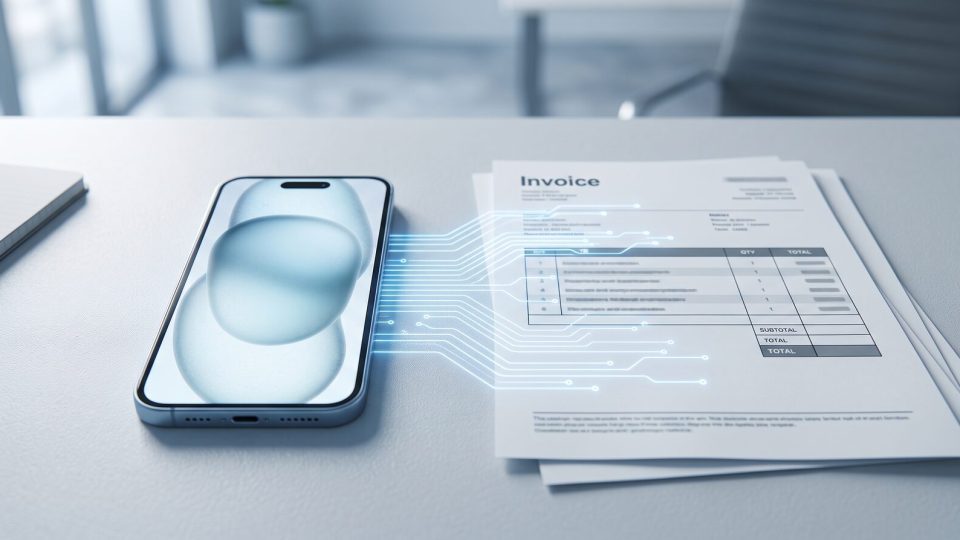
If you run a consultancy, agency, or professional practice, your relationship with VAT is probably simple: your bookkeeper (or Xero, or you at 11pm) totals everything up every two months, you file a VAT201, and you pay or claim whatever the number says. It’s a periodic, after-the-fact exercise. You look back at what happened and report on it.
SARS wants to change that fundamentally, and on 17 August 2026, it put the detail on the table. The consultation paper on mandatory e-invoicing and near-real-time VAT reporting isn’t a minor tweak to the VAT201 form. It’s a proposal to rebuild how VAT gets reported in South Africa, moving from “tell us what happened” to “show us as it happens.”
Public comment closes 16 October 2026, and full rollout isn’t expected until around 2030. So this isn’t a fire drill. But it is exactly the kind of shift that rewards the businesses who start paying attention early, and quietly disadvantages the ones who wait for a deadline email to care.
What SARS Is Actually Proposing
Strip away the acronyms and the proposal comes down to this: instead of you compiling your own VAT return from your own records, SARS wants to see the invoice data directly, close to the moment the transaction happens.
The mechanism SARS is leaning on is what’s called a five-corner e-invoicing model, already used in various forms across the EU, and closely mirroring systems in countries like Australia and Singapore. It sounds technical, but the five “corners” are just five parties in the chain of a single invoice:
- You (the supplier), issuing the invoice
- Your access point, an accredited service provider or platform that formats and transmits your invoice data
- Your client’s access point, the equivalent service provider on the buyer’s side
- Your client (the buyer), receiving the invoice
- SARS, receiving a copy or summary of the transaction data at the same time
The point of routing invoices through accredited access points, rather than just emailing a PDF, is standardisation. Every invoice gets issued in a structured, machine-readable format that SARS’s systems can ingest automatically, cross-check, and validate, largely without a human (on either side) having to key anything in twice.
The practical effect: VAT compliance stops being something you reconstruct once every two months from your own books. It becomes a by-product of simply doing business, provided your invoicing system is plugged into the network correctly.
How This Differs From Filing VAT Today
Right now, the VAT system in South Africa runs on trust-then-verify. You self-assess, file your VAT201 based on your own records, and SARS audits or queries after the fact if something looks off. Your invoicing software, your bookkeeping platform, and SARS’s systems don’t talk to each other in real time, they’re reconciled by a human, periodically.
Under the e-invoicing model, three things change:
- Timing. Instead of reporting VAT in arrears every two months, transaction data flows to SARS at, or very near, the point of invoicing. “Near-real-time” is the phrase SARS uses, and it’s deliberate, this isn’t necessarily instant, but it’s a long way from bimonthly.
- Format. Invoices need to be issued in a structured digital format that an access point can transmit and SARS can read programmatically. A scanned PDF or a Word-doc invoice won’t cut it in the target-state model.
- Who’s checking the numbers. Today, discrepancies surface when you file, or when SARS selects you for verification. In a near-real-time model, mismatches between what you invoice and what your client records can surface almost immediately, which is good news if your records are clean, and a real problem if your invoicing is inconsistent, delayed, or manually patched together.
For a services business already running clean cloud accounting, this is mostly an infrastructure and process question: does your invoicing tool support structured e-invoice formats, and does it connect to an accredited access point? For a business still issuing ad hoc invoices from a template or juggling multiple systems that don’t reconcile automatically, it’s a bigger shift, not because the compliance work increases, but because the tolerance for mess decreases.
Why 2030 Should Change How You Plan, Not Whether You Plan
We want to be clear about the timeline because we think the “SARS is coming for your invoices, act now” framing does readers a disservice. It isn’t accurate, and it isn’t how we operate.
The comment period on this consultation paper runs until 16 October 2026. After that, expect a phased approach, likely starting with large taxpayers and specific sectors, with full mandatory adoption for the broader tax base projected around 2030. That’s a multi-year runway, similar to how e-invoicing mandates have rolled out elsewhere: pilot, phase, then universal.
So no, you don’t need to overhaul your invoicing stack this quarter. What you should do is make sure that when the mandate does arrive at your door, it’s a non-event rather than a scramble. That means:
- Using invoicing and accounting software that’s likely to support structured e-invoicing formats as standards firm up (most modern cloud platforms are built with this direction in mind).
- Keeping your invoice data clean and consistent now, correct VAT treatment, correct client details, no manual patch jobs, because that discipline is the actual prerequisite, not the software itself.
- Having someone on your side who’s tracking the regulation as it moves from consultation paper to draft legislation to implementation dates, so you’re never caught reacting to a deadline you didn’t see coming.
We’re Already Tracking This For Our Clients
This is precisely the kind of regulatory shift that’s easy to miss if finance is one of six hats you wear, and expensive to ignore if you miss it entirely. At ThriveCFO, staying ahead of SARS’s roadmap isn’t a side project, it’s part of what “cloud accounting done properly” means to us. We’re following this consultation process, we’ll be reviewing the draft legislation when it lands, and we’re already thinking through what it means for the cloud platforms our clients use.
You built your business to do the work you’re good at, not to become an amateur regulatory analyst every time SARS publishes a paper. That’s the freedom a virtual CFO relationship is supposed to give you back, someone watching the horizon so you don’t have to.
If you’d like to talk through what this proposal means for your specific setup, or just want a second opinion on whether your current accounting stack is future-ready, let’s have that conversation now, while there’s no pressure and plenty of runway.
Book a call with ThriveCFO and let’s make sure you’re ahead of this one, not behind it.
